So You’ve Got Your Amateur Radio Licence — Now What?
Congratulations — you studied, passed the exam and now you have your amateur radio certificate and call sign. That is a great accomplishment.
It can also create a new question almost immediately: now what?
Amateur radio is an enormous hobby, and nobody needs to learn everything at once. The best next step is simply to get on the air, meet other amateurs and start exploring the parts of the hobby that interest you.
Program Your Local Repeaters
If you have a handheld or mobile VHF/UHF radio, local repeaters are one of the easiest places to begin. Program a few repeaters in your area and spend some time listening.
HARC operates repeaters serving the Hamilton area, and club members are always happy to hear a new call sign on the air. Listening for a while will help you get comfortable with how repeater conversations sound before you make your first contact.
Make That First Call
You do not need a special script. Listen to make sure the repeater is not in use, identify with your call sign and say that you are a newly licensed operator looking to make your first contact.
You may be surprised how quickly someone answers.
Every amateur radio operator remembers being new. Most hams are happy to slow down, answer questions and help someone get started.
Come to a Club Meeting
A radio club can save a new operator a great deal of trial and error. Before spending money on radios, antennas or accessories, talk to people who have already used them.
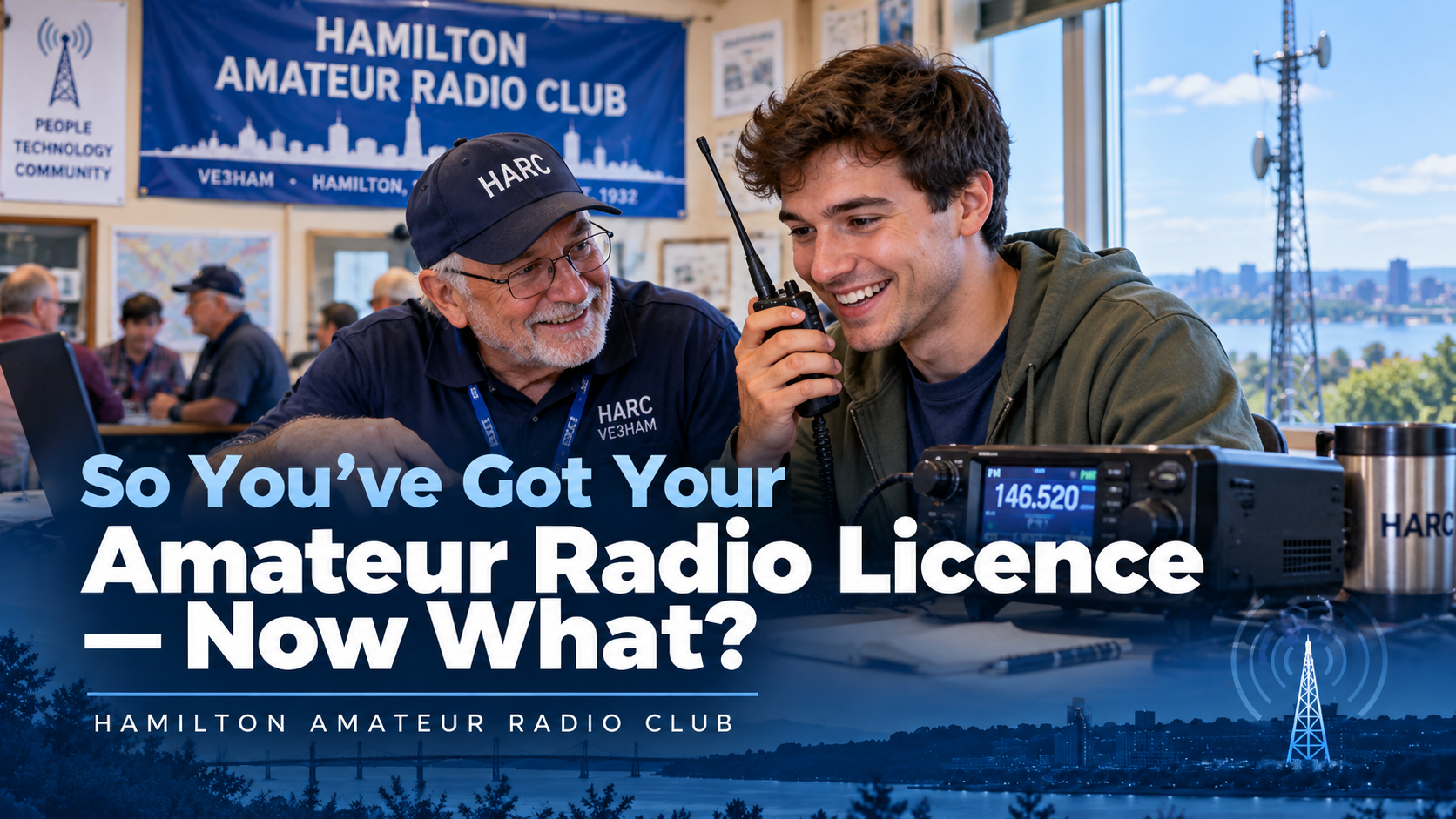
HARC meetings and events are a great opportunity to meet local operators, see different equipment and discover parts of amateur radio you may not have encountered while studying for the exam.
Try Different Parts of the Hobby
Amateur radio is much bigger than talking through a local repeater. Depending on your licence privileges, equipment and interests, you might explore:
- HF voice contacts
- Digital modes such as FT8
- Amateur radio satellites
- Contesting
- Parks on the Air and portable operating
- Antenna building and experimentation
- Morse code
- Emergency and public-service communications
- Radio direction finding and fox hunts
You do not have to pick one. Part of the fun is trying different things until you find what keeps drawing you back to the radio.
Do Not Rush to Buy Everything
One of the easiest mistakes for a new ham is buying equipment before knowing what they actually want to do with it.
Ask questions. Visit other stations. Attend club events. Try equipment when you have the opportunity. A radio that is perfect for one operator may make little sense for another.
Ask for Help
Most experienced radio amateurs learned the hobby with help from someone else. Amateur radio has a long tradition of experienced operators helping newcomers understand equipment, antennas, operating practices and all of the little things that never quite fit into an exam question bank.
If you are newly licensed in the Hamilton area, introduce yourself to HARC. Come to a meeting, attend an event or say hello on the air.
Your licence gets you through the door. The fun part starts after that.